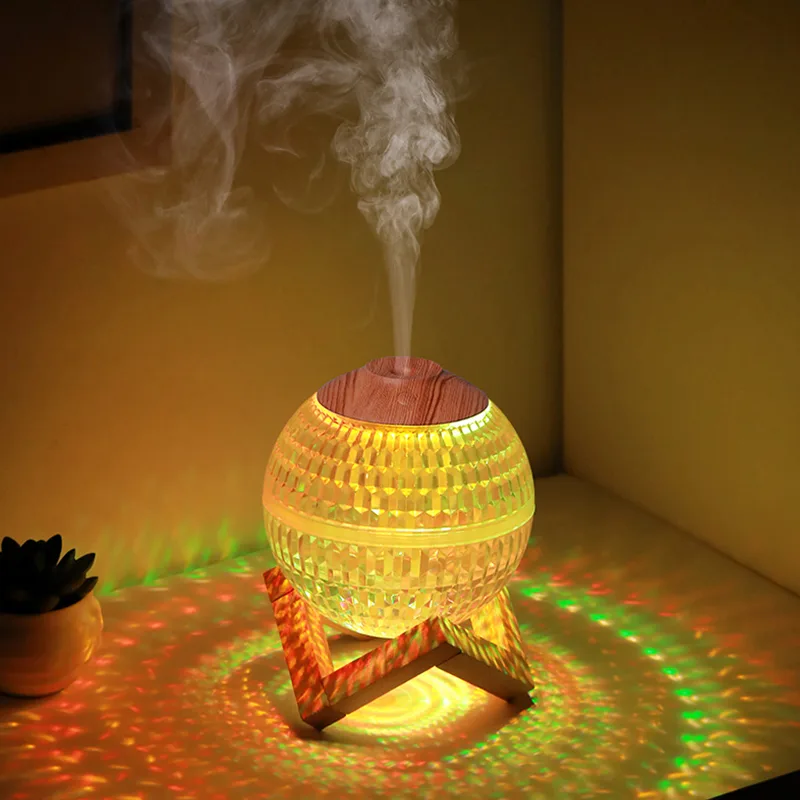
A diffuser can become part of the visual character of a room: a small object on a shelf, a glow beside a reading chair or a detail on a console table. Compare the design in the setting where it will live, then give equal attention to the controls and the care instructions.
Look at the light as well as the shape
Product photographs often use dim surroundings to make lighting effects stand out. Ask for a video in ordinary room light and a clear description of the available light modes. Check whether brightness can be changed and whether the light can be switched off independently.
Compare the listed dimensions with nearby objects in your room. Think about the finish, the cable route and the space needed for filling. A design that looks striking in a close-up should also work as part of your everyday arrangement.
Confirm what the device is designed to use
Check the exact model instructions for compatible liquids and any restrictions. Humidifier and aroma diffuser are sometimes used together in listing titles, so do not infer compatibility from a category name or a photograph of an oil bottle.
Ask the supplier to identify the tank material, filling method and cleaning requirements. If you are sourcing more than one model, keep a separate instruction sheet for each rather than applying one device’s directions to the whole range.
Try the controls before making a larger order
Use a sample to explore the buttons, indicator lights and operating modes. Note whether the controls are easy to understand and whether the supplied instructions explain them clearly. Record the exact options included in the sample.
For a wholesale enquiry, ask about replacement parts, packaging and instruction languages alongside the unit price. Avoid adding scent, wellness or room-performance claims to your product description unless you have suitable evidence for that exact model.