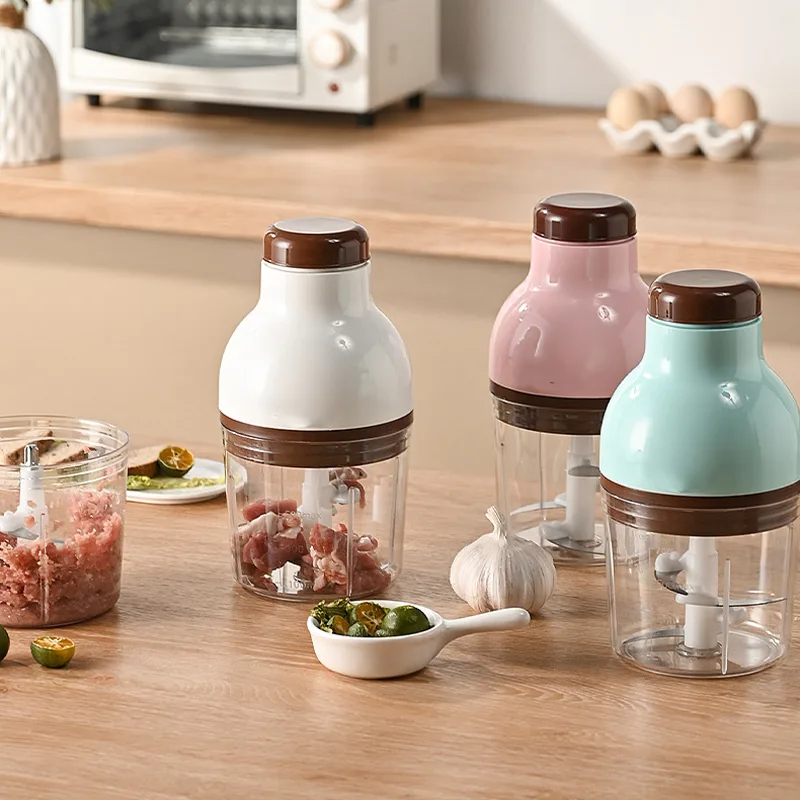
A small appliance earns its place on the counter when it suits a task you do often. Before comparing mini choppers, write down a few familiar jobs: preparing herbs, chopping vegetables or making a small batch of sauce. Use those tasks to guide your questions about capacity, controls and included parts.
Think in portions, not just bowl size
The advertised bowl volume and the amount you can process at once may be different. Ask for the recommended working quantity for your intended ingredients, and check whether the instructions describe any limits or preparation steps.
A small bowl can be convenient for a modest portion, while a larger household may prefer fewer batches. Compare the complete appliance dimensions as well as the bowl capacity; both affect how comfortably it fits your kitchen.
Make the attachment list specific
Listings may show several bowls, blades or cutting discs together. Ask the supplier to identify every part included in the exact option you plan to buy. A multi-function title is less useful than a clear parts list with a matching photograph.
For an unfamiliar attachment, request an operating demonstration and its instructions. Check which ingredients it is intended to handle rather than treating all chopping, slicing and shredding functions as interchangeable.
Leave space for the routine afterwards
Check the manufacturer’s cleaning instructions for the bowl, lid, blade assembly and powered base separately. Confirm any dishwasher claim for each part, and follow the supplied guidance when handling sharp components.
Think about where the parts will dry and how they will be stored together. If you are comparing samples, include assembly, cleaning and packing away in your evaluation rather than judging only the first chopping demonstration.